
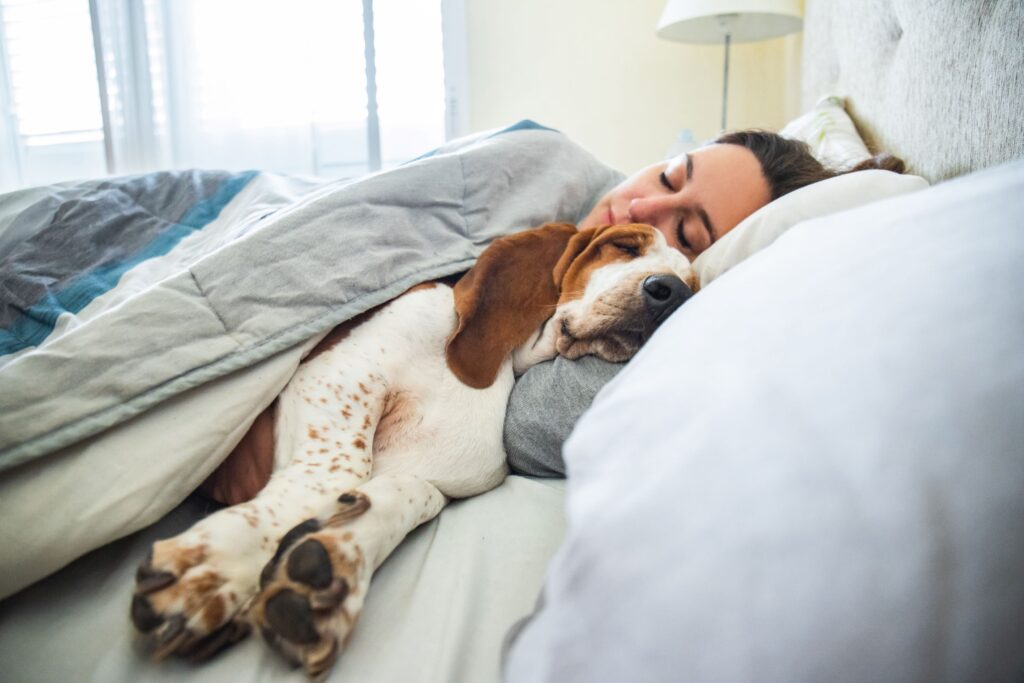
Did you know that sources estimate that roughly 46% to 50% of Americans sleep with a pet in bed with them? Many people believe their furry companion helps them get better rest, while others firmly believe their pet’s nocturnal activities will surely keep them awake.
You might not think this is a major dental health consideration, but if you have sleep apnea, it’s important to know whether your little friend affects your nightly condition. If you’re curious, continue reading to learn more about it!
What is Sleep Apnea?
Those with sleep apnea suffer from interruptions to their breathing that prevent them from completing the circadian cycles necessary for rest and rejuvenation. The most common type is obstructive sleep apnea (OSA), which occurs when your airways are blocked, such as by excess tissue in the throat or overly tight muscles.
Whatever the reason for it, this condition can significantly affect your oral and overall health. If left untreated, you might experience dry mouth, high blood pressure, heart disease, stroke, daytime exhaustion, mood swings, jaw pain or tightness, and other medical concerns.
How Does My Pet Affect My Sleep?
It’s believed that about half of the country’s population sleeps with a pet, and many of those swear that the presence of their beloved companion improves their rest. But is there any truth to this?
One study tackled this question by measuring people’s sleep efficiency, which refers to how long they’re asleep versus lying in bed awake, with and without their dog. The results revealed that those who participated had the highest sleep efficiency with a human partner and had a medium-sized dog in the room, but not in bed.
This may be partly because animals may make noises, become playful, or engage in other nightly activities that wake you up, potentially worsening sleep apnea symptoms.
How Can I Treat My Symptoms?
If you’re concerned that you might have developed sleep apnea, you’ll need a diagnosis to pursue treatment. Many dentists can provide a survey to start your journey, then refer you to a trusted sleep doctor to officially diagnose your condition and its severity.
Then, your dentist can provide possible solutions, such as an oral appliance you wear at night that positions your jaw to keep your airways open so you can breathe easily.
Whether or not you keep a fuzzy friend with you in bed at night, it’s essential to seek help for your sleep apnea to prevent potential problems!
Meet the Author
Dr. James Kirby is passionate about helping patients improve their daily lives by enhancing their oral health. He earned his dental degree from the University of Tennessee in Memphis, and today, has 15+ years of experience. He delivers a comprehensive menu of services under one roof, including oral appliances for sleep apnea, and welcomes people of all ages. If you’re concerned about your sleep efficiency, you can request an appointment on the website or call (615) 327-2123.