

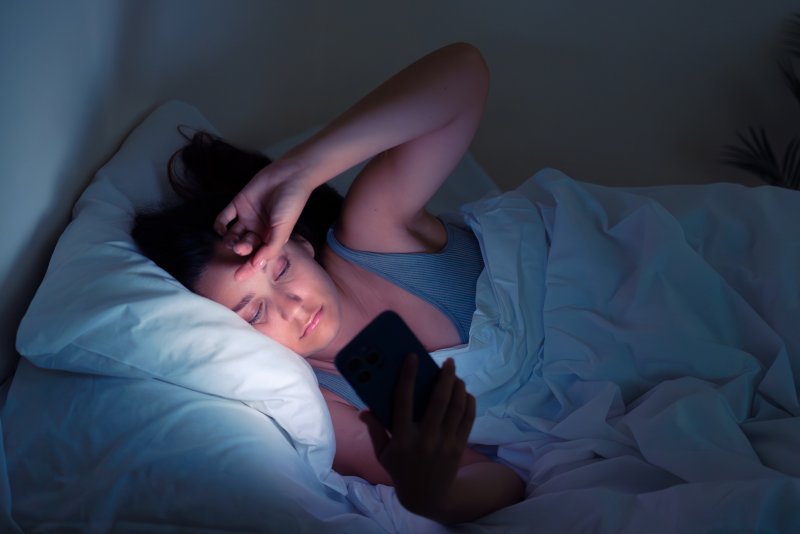
Sleep apnea can lower your quality of life if it remains untreated. Frequent interruptions throughout the night, waking up gasping for air, loud snoring, and daytime fatigue are all likely occurrences, depending on the severity of your condition. However, if you already struggle to get ample rest, getting distracted by your cell phone while in bed will only make your symptoms worse. Learn why you should put all screens away before turning out the lights.
The Problem with Cell Phones
The body contains various hormones that help you stay awake and go to sleep each day. Cortisol and melatonin are essential if you want to maintain a healthy sleep-wake cycle. However, certain factors and influences can alter the production of these hormones, creating confusion in your body and brain.
Cell phones, tablets, TVs, e-readers, and all other back-lit devices emit what is known as blue light, which is short-wavelength-enriched light. When exposed to it for prolonged periods, it can reduce the normal melatonin production that causes you to become sleepy.
The use of a cell phone before bedtime can also minimize how much time you spend in each sleep cycle – a problem that can lead to decreased cognitive function.
How Cell Phones Can Be Problematic If You Have Sleep Apnea
If you already have sleep apnea and are struggling with daytime fatigue, staying up to scroll on your cell phone is not helping matters.
Going to bed late and waking up multiple times throughout the night because of apnea episodes can result in worsening symptoms that put your overall health at risk. Daytime fatigue, drowsy driving, high blood pressure, stroke, heart attack, diabetes, and other serious complications can be the result.
What Can You Do to Fix This Problem?
First, if you have yet to be formally diagnosed with sleep apnea, talk to a trusted physician or dentist about undergoing a sleep study. This will determine if you need treatment. If so, find out whether a CPAP (continuous positive airway pressure) or an oral appliance will be best to address your airway obstruction.
Once you begin treating your sleep apnea, make sure to:
- Establish a bedtime routine that includes relaxing activities (i.e., reading a book, meditation, journaling, etc.)
- Dim your bedroom lights to encourage melatonin production.
- Create a screen-free zone in your bedroom.
Technology may be a good thing, but too much of it can be problematic for your sleep and overall well-being. Learn when to turn it off so that you can get the sleep you need.
About the Author
Dr. James Kirby is a dentist who is specially trained in sleep apnea orthotics – a non-invasive, non-surgical approach to improving a patient’s sleep quality. Working closely with individuals who struggle to get much-needed rest each night, he can provide the appropriate solution to help minimize interruptions so that better sleep is achieved. If you want to do something about your snoring or lack of quality rest, visit our website or call (615) 327-2123.